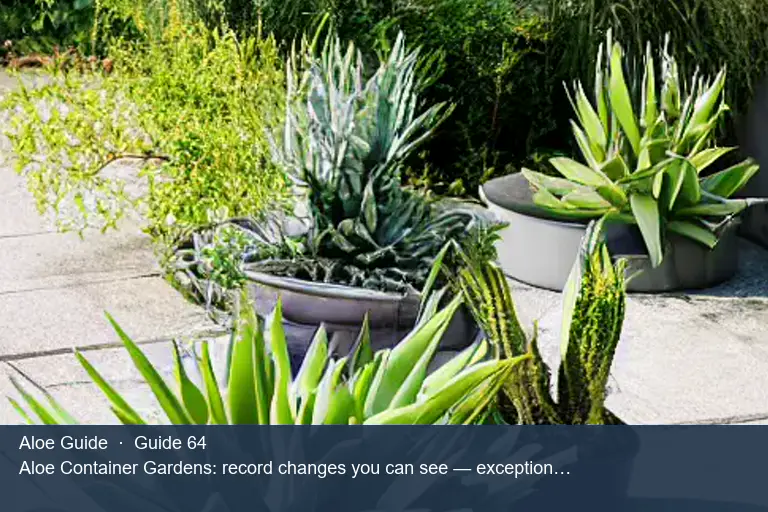
Aloe Container Gardens: record changes you can see — exception plan for a compact growing area; setup for a first project
Aloe container gardens are a popular option for growing succulents, plants that thrive in low light and compact growing areas. They offer several advantages over traditional soil gardens, including compactness, reduced maintenance, and improved air circulation. However, there are some practical tasks to consider when setting up a first project for an aloe container garden.
First, choose the right size. For a compact growing area, a 16-gallon container is ideal. This size is large enough to accommodate multiple plants while still providing enough space to grow them. Consider the amount of light your plants will receive and the number of plants you plan to grow. Aloe containers often offer a wide variety of plants, from succulents to flowering plants, so you can choose the perfect fit for your needs.
Next, prepare your soil. Aloe containers are generally made of a clay-based soil that is ideal for low light conditions. Ensure that your soil is well-draining, with a good mixture of sand and gravel to improve air circulation and drainage. Consider adding a few perlite pellets or a mixture of sand and perlite to the soil to enhance drainage and improve air circulation.
Next, choose your plants. Aloe containers offer a wide variety of plants, from succulents to flowering plants. Make sure to choose plants that are compatible with the light conditions and soil type in your area.
Next, plant your plants. Once you have your plants, choose a container that will accommodate the height of your plants. For a compact growing area, a 16-gallon container is ideal, but you can also consider a 20-gallon or 24-gallon container depending on the height of your plants. When planting, ensure that the soil is well-draining, with a good mixture of sand and gravel to improve air circulation and drainage. Make sure to plant your plants at the appropriate depth for their height, and ensure that they are planted with enough space to grow in a compact growing area.
Next, water your plants. Aloe containers are ideal for water conservation, as they offer a wide variety of plants that can thrive in low light conditions. Make sure to water your plants regularly, but only when the soil is dry. Consider using a watering can or a watering device to ensure that your plants are watered regularly, but only when the soil is dry.
Next, care for your plants. Aloe containers are typically water conserving, but you can also consider using a spray or a watering can to ensure that your plants are watered regularly. Make sure to prune your plants regularly to encourage growth and remove any dead or diseased leaves. Consider using a fertilizer or a plant food to promote growth and reduce the need for watering.
Lastly, enjoy your aloe container garden. Aloe container gardens can offer a wide variety of plants, from succulents to flowering plants, so you can choose the perfect fit for your needs. Enjoy your aloe container garden and see the changes you can see.