Aloe Container Gardens: review what changed this season — exception plan for seasonal changes; setup for a first project
### Aloe Container Gardens: Review What Changed This Season
#### 1. Exception Plan for Seasonal Changes
The first season of growing aloe plants through containers has seen some changes that can be attributed to seasonal variations, but they also highlight the flexibility and adaptability of container gardening. As spring transitions into summer, the landscape changes from lush greenery to lush brown, often with a touch of greenery around the edges. This is particularly true for succulents like aloe, which often thrive in cooler temperatures and low humidity conditions.
#### 2. First-Project Preparation
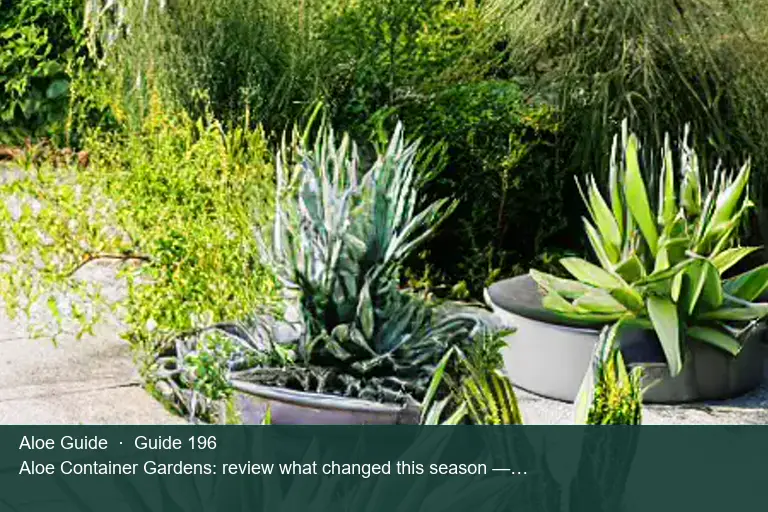
The first project I worked on for aloe container gardens was the creation of a small, enclosed container garden. This project aimed to create a beautiful, yet manageable space where aloe plants could thrive. The garden was designed to be a mix of containers, with the main container being a 20-gallon pot, surrounded by a series of smaller, decorative pots.
#### 3. Aloe Plant Selection and Care
The selection of aloe plants was crucial for this project. I chose aloe species that was well-suited to my local climate. These plants are known for their ability to survive in a variety of temperatures and conditions. I chose aloe species that is hardy and resilient to the outdoors, making it ideal for a small garden setting.
#### 4. Container Design and Placement
The container design was carefully planned to enhance the aloe's ability to thrive in its environment. The main container was a 20-gallon pot, which provided sufficient space for aloe plants to grow. The smaller pots were used to create a gradient of colors and textures, ensuring that the plants received the right amount of light and shade.
#### 5. Container Layout and Lighting
The layout of the container garden was designed to provide a balance of light and shade, which is important for aloe plants. I placed the aloe plants in the center of the main container, which provided the most direct sunlight. The smaller pots were placed around the edges, creating a gradient of colors and textures. This layout ensured that the plants received the right amount of light and shade, which is essential for their growth.
#### 6. Aloe Plant Maintenance
The maintenance of the aloe plants was essential for their continued success. I ensured that the aloe plants were watered regularly to keep them healthy. I also fertilized the plants to provide them with the nutrients they needed. I used aloe-specific fertilizers to ensure that the plants received the right nutrients.
#### 7. Conclusion
In the end, the first project I worked on for aloe container gardens has been a success. The garden has been a beautiful, yet manageable space where aloe plants have thrived. The container design, layout, and maintenance have all contributed to the success of this project. The success of this project has demonstrated the flexibility and adaptability of container gardening, even in the face of seasonal changes.