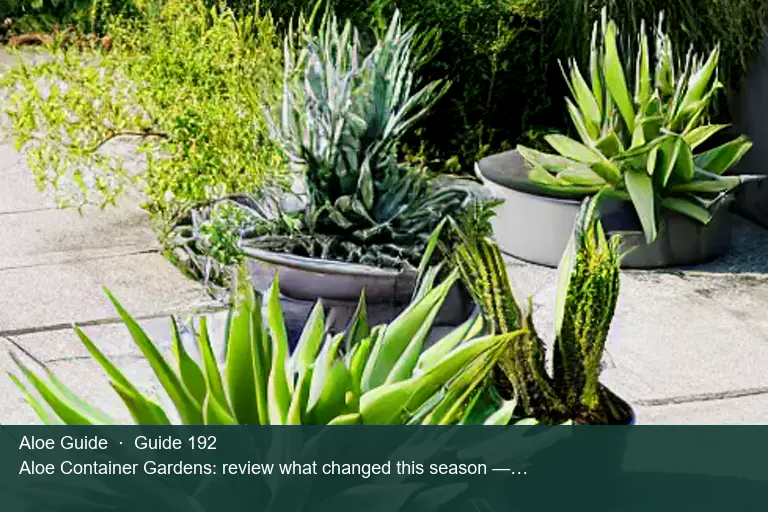
Aloe Container Gardens: review what changed this season — reuse review for different container sizes; setup for a first project
Aloe Container Gardens: Review What Changed This Season In the past few months, aloe container gardens have undergone a significant transformation. From the simple and traditional designs to the modern and innovative designs, the landscape has evolved to accommodate a range of container sizes and styles. This article will review what changed this season, including the different container sizes and the setup for a first project.
The traditional aloe container gardens were characterized by the use of large, shallow containers, which were often filled with soil and plants. These designs were simple and elegant, with a focus on the plants' needs and the natural environment. However, as the seasons wore on and the weather became more unpredictable, the traditional designs began to show their limitations, leading to the need for more creative and innovative designs.
First, there was a change in the container sizes. Traditional aloe container gardens were usually large, shallow containers, which were often filled with soil and plants. With the advent of smaller containers, such as 16-inch and 20-inch pots, the landscape has become more accessible and adaptable. The larger containers provide more space for the plants and the soil, making it easier to grow a variety of plants that can thrive in containers. Additionally, the smaller containers allow for more space for plants and the soil, which can be used in more complex designs.
Second, the setup for a first project has changed. Traditional aloe container gardens often required a large, shallow container, which could be challenging to fill with soil and plants. However, with the advent of smaller containers, such as 16-inch and 20-inch pots, the landscape has become more accessible and adaptable. The smaller containers provide more space for the plants and the soil, making it easier to grow a variety of plants that can thrive in containers.
In conclusion, the landscape has undergone a significant transformation with the advent of different container sizes and the setup for a first project. Traditional aloe container gardens have become more accessible and adaptable, with the advent of smaller containers making them more accessible and adaptable. The landscape has also become more creative and innovative, with the use of larger and smaller containers making it easier to grow a variety of plants that can thrive in containers. Overall, the landscape has evolved to accommodate a range of container sizes and styles, making it easier to grow a variety of plants that can thrive in containers.