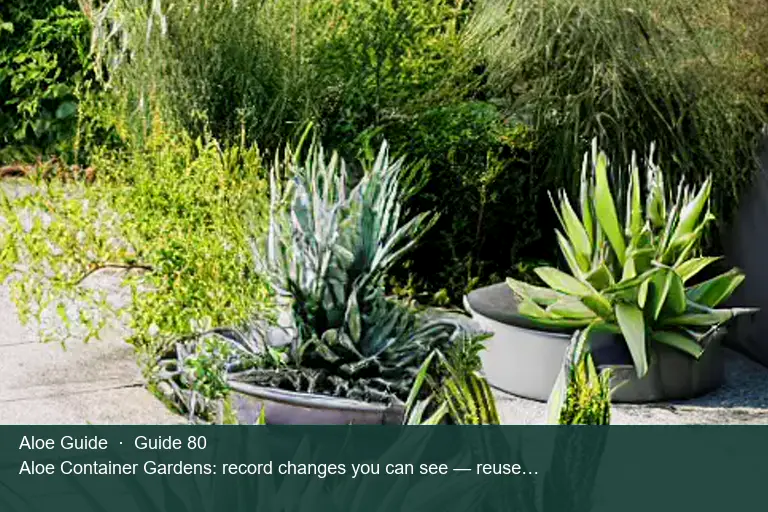
Aloe Container Gardens: record changes you can see — reuse review for a caretaker handover; setup for a first project
Aloe container gardens, with their unique and versatile nature, have become a popular choice for many gardeners. They offer a comfortable, yet stylish way to display succulents, a popular species that thrives in warm environments. But, with so much to see, it's important to note that some changes can be observed as you prepare for your first project. Here’s how you can make the most of this opportunity.
First, consider the types of containers you'll be using. Aloe containers can range from small, compact varieties to larger, more open shapes. Choose one that best suits the size of your container and the space you have available. This could be a good way to start the project by ensuring you have the right tools.
Next, think about the lighting you'll be using. While aloe containers don’t require a lot of light, they can thrive in bright, indirect sunlight. If your container is smaller, consider using grow lights to increase your plant’s light levels. If you have a larger container, you can use grow lights to supplement your natural light, which is often more abundant in warmer environments.
Now, let’s take a look at the soil. Aloe container soil is designed to be compact, with plenty of air pockets and a loose texture. Choose a soil that is well-draining, as this will help keep your plants healthy and reduce water waste. You can also add a little compost or peat moss to the soil to improve its drainage and health.
Once you’ve set up, it's time to plant. Start with a small handful of soil, then add your plants, making sure to space them out evenly. This will help keep the soil a consistent depth and prevent water from pooling around the roots. Water the plants thoroughly after planting, making sure to soak the soil around the base of the plants.
As you continue with this project, be mindful of the environment around your plants. Avoid over-watering, as this can lead to root rot and other fungal diseases. Also, be cautious of pests and diseases that can affect aloe plants. Keep an eye out for signs of stress, such as wilting leaves or yellowing leaves, and address them before they become more severe.
In conclusion, aloe container gardens are a wonderful option for gardeners looking to display a variety of succulents. By considering the types of containers you'll be using, the lighting you'll be using, the soil you'll be adding, and the plants you'll be planting, you can make the most of the opportunity. With a little planning and attention to detail, you can create a beautiful and healthy display that will serve as a reminder of the joy and beauty of aloe container gardens.