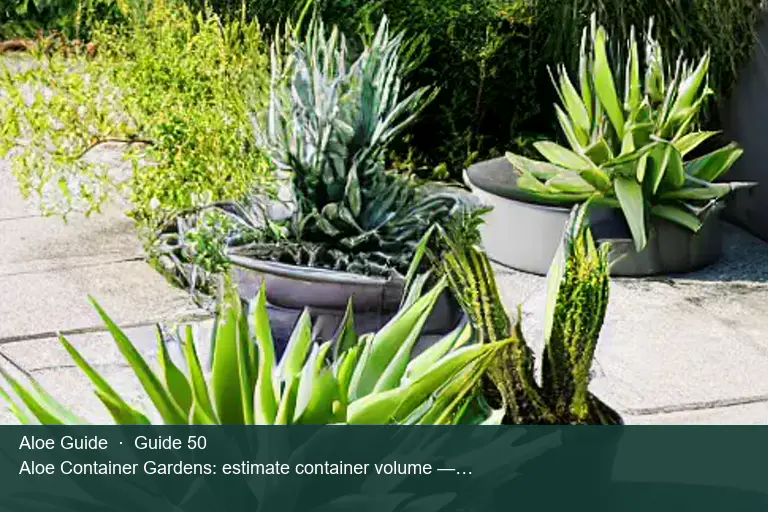
Aloe Container Gardens: estimate container volume — preparation guide for existing containers; setup for a first project
Aloe container gardens are an excellent option for those with limited space or who prefer to grow plants indoors. The containers are designed to hold aloe plants, which can thrive in a variety of temperatures and lighting conditions. To create a successful aloe container garden, it's important to consider the volume and size of the containers. In this article, we'll explore how to estimate the container volume for aloe container gardens, as well as the steps to prepare the containers for a first project.
**Estimating Container Volume**
The volume of aloe container garden is determined by the size of the containers and the height of the plants. The containers are typically rectangular or cylindrical shapes, and their volumes can be calculated based on the area of the base and the height of the plants. For example, a 30-inch by 20-inch container with a height of 3 feet will have a volume of 600 cubic inches, while a 20-inch by 16-inch container with a height of 10 feet will have a volume of 2560 cubic inches.
To estimate the volume of aloe container garden, you will need to measure the dimensions of the containers and the height of the plants. This can be done using a tape measure or a measuring tape with a compass attachment. The volume can then be calculated using the formula: Volume = Area × Height.
**Preparing the Containers for a First Project**
Once you have estimated the volume of the containers, the next step is to prepare the containers for a first project. The first step is to ensure that the containers are properly sealed and dry. This can be achieved by covering the containers with a plastic cover or a cover with a metal strip. The second step is to fill the containers with a nutrient-rich soil mix, which is commonly used in aloe container gardens.
The third step is to add the necessary water to the containers, which should be done at least two weeks before the first transplanting. The fourth step is to place the plants in the containers, and to ensure that they are not overcrowded. The fifth step is to water the plants regularly, but avoid overwatering.
**Conclusion**
In summary, aloe container gardens are an excellent option for those with limited space or who prefer to grow plants indoors. By estimating the container volume and preparing the containers for a first project, you can create a successful garden that will thrive in the heat and light conditions of your environment.