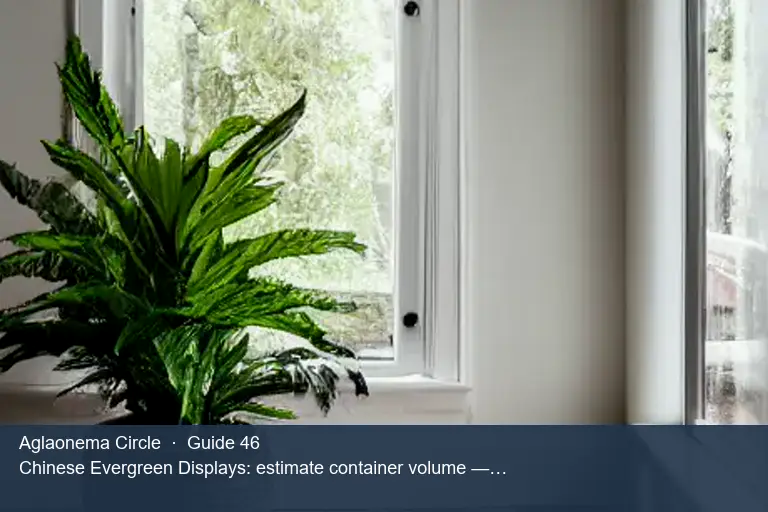
Chinese Evergreen Displays: estimate container volume — measurement guide for shared plant care; setup in shared households
Evergreen displays, with their graceful branches and lush leaves, are a popular choice for shared household spaces. When it comes to sharing a container, choosing the right size can mean the difference between a few plants thriving and a few struggling to thrive. This article will guide you through the practical task of estimating container volume for Chinese evergreen displays, ensuring that you can easily manage shared plant care in your household.
### Step 1: Assess Your Available Space
Before you start measuring, it's essential to evaluate your available space. In a shared household, the container should be large enough to accommodate all the plants you wish to care for. If you have a small container, you might want to consider a larger one, such as a 40-gallon container or a 60-gallon container, to accommodate a smaller number of plants. If you have a large container, you may need to choose a smaller container to fit more plants.
### Step 2: Determine the Number of Plants
Next, determine the number of plants you wish to care for. This will help you choose the right size of container. For example, if you have a small number of plants, you might need a smaller container. If you have a large number of plants, you may need a larger container.
### Step 3: Measure the Container Volume
Now that you have the number of plants and the size of the container, it's time to measure the container volume. This can be done using a measuring tape or a measuring cup. Use the measuring tape to measure the circumference of the base of the container, and the measuring cup to measure the height of the container. For a container with a diameter of 40 inches, the volume would be approximately 150 gallons, and for a container with a diameter of 60 inches, the volume would be approximately 200 gallons.
### Step 4: Consider the Plant Height and Branching
When it comes to the plant height and branching, consider the height of the plants and how much space each plant will require. For example, if you have a small plant, you might need to provide it with more space than if you have a large plant. This will help you choose the right size of container, ensuring that you can accommodate all the plants.
### Step 5: Set Up the Container
Once you have measured the container, set it up in your shared household. Make sure to place the container in a central location where all the plants can easily access it. If you have a large container, you may want to consider placing it near the entryway or the main room where the plants are most likely to come into contact.
### Conclusion
In conclusion, estimating container volume for Chinese evergreen displays is a straightforward task that can help you manage shared plant care in your household. By following these steps, you can easily determine the right size of container, ensuring that you can accommodate all the plants you wish to care for. Remember to consider the number of plants and the size of the container, and you can set up the container in your shared household to ensure that all the plants can thrive together.
### Reference
This article is based on the steps provided in the "Evergreen Displays" section of the "Chinese Evergreen Displays" article.