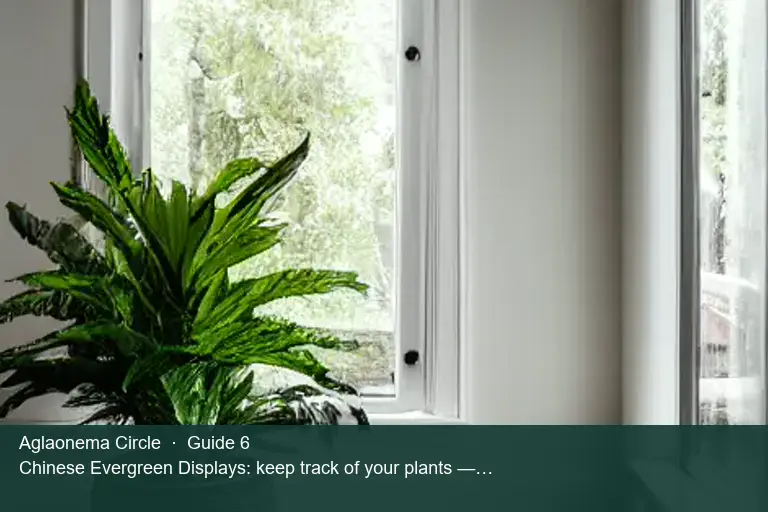
Chinese Evergreen Displays: keep track of your plants — exception plan for shared plant care; setup in shared households
**Chinese Evergreen Displays: Keeping Your Plants For Shared-Household Plans**
In a world where the shared-household plan has become a cornerstone of modern living, the Chinese evergreen displays have become an essential fixture for many. These displays have not only served as a practical solution for keeping plants in shared spaces but have also become a way to encourage a sense of community and appreciation for plants. This article will explore the unique features of Chinese evergreen displays, how they can be set up in shared households, and what benefits they offer.
**The Unique Features of Chinese Evergreen Displays**
Chinese evergreen displays are a unique architectural feature that stands out from other plants. These displays are made of bamboo or other plant materials and are designed to be hung vertically, creating a visually appealing and eco-friendly environment. The materials used in these displays are often bamboo, which is known for its durability and low maintenance requirements. Bamboo is also known for its ability to grow rapidly and thrive in various climates, making it an ideal choice for shared households.
The key feature of these displays is their vertical arrangement. This means that the plants can be placed in a vertical orientation, allowing them to thrive in shared spaces. The vertical arrangement also makes it easier for the plants to be moved and moved to a different space if needed, without having to remove the entire display.
Additionally, Chinese evergreen displays are designed to be self-sustaining. Unlike some other plants, such as succulents or pothos, these displays are self-sustaining, meaning that they will thrive even if no water is added. This is a key benefit of these displays, as it ensures that the plants are not overwatered or underwatered.
**Setting Up in Shared-Household Plans**
Setting up Chinese evergreen displays in shared household plans is a straightforward process. First, it is essential to decide on the number of displays that will be used in the shared space. This can be based on the size and number of people in the household. Once the number of displays has been decided, it is then time to choose the materials and design of the displays. Bamboo is a common choice for these displays, as it is known for its durability and ease of installation.
Once the materials have been chosen, it is time to plan the placement of the displays. The displays can be placed in a variety of places, such as on a wall, in a corner, or in a space where there is a lot of light. The placement of the displays should be designed to ensure that they are not obstructing the views of other people in the shared space. This can be achieved by using a clear and well-lit space.
The final step is to install the displays. Once the displays have been installed, they should be maintained regularly to ensure that they are not overwatered or underwatered. It is also important to regularly check that the displays are not damaged or damaged.
**Benefits of Chinese Evergreen Displays**
Chinese evergreen displays have many benefits, including the ability to keep plants in shared spaces, their self-sustaining nature, and their ability to create a visually appealing and eco-friendly environment. These features make them an excellent choice for shared household plans, where plants are often shared between members of the household.
In conclusion, Chinese evergreen displays are a unique and practical solution for keeping plants in shared household plans. They are made of bamboo and are designed to be self-sustaining, allowing them to thrive in shared spaces. Setting them up is a straightforward process, with the right materials and design, and regular maintenance to ensure that they are not overwatered or underwatered. These displays are a great addition to any shared household plan, making them an essential feature for keeping plants in shared spaces.